Cedar Rapids Wood Fence Staining Contractor

Fence Staining & Sealing in Cedar Rapids, Iowa

Protect the look and useful life of a wood fence with preparation and finish choices matched to the actual wood. We stain and seal cedar, privacy, picket, horizontal and other wood fencing in Cedar Rapids, including newer wood, weathered fencing and previously coated surfaces that need a condition-specific plan.

Cedar • Privacy Fences • New Wood • Weathered Wood • Surface Prep • Maintenance
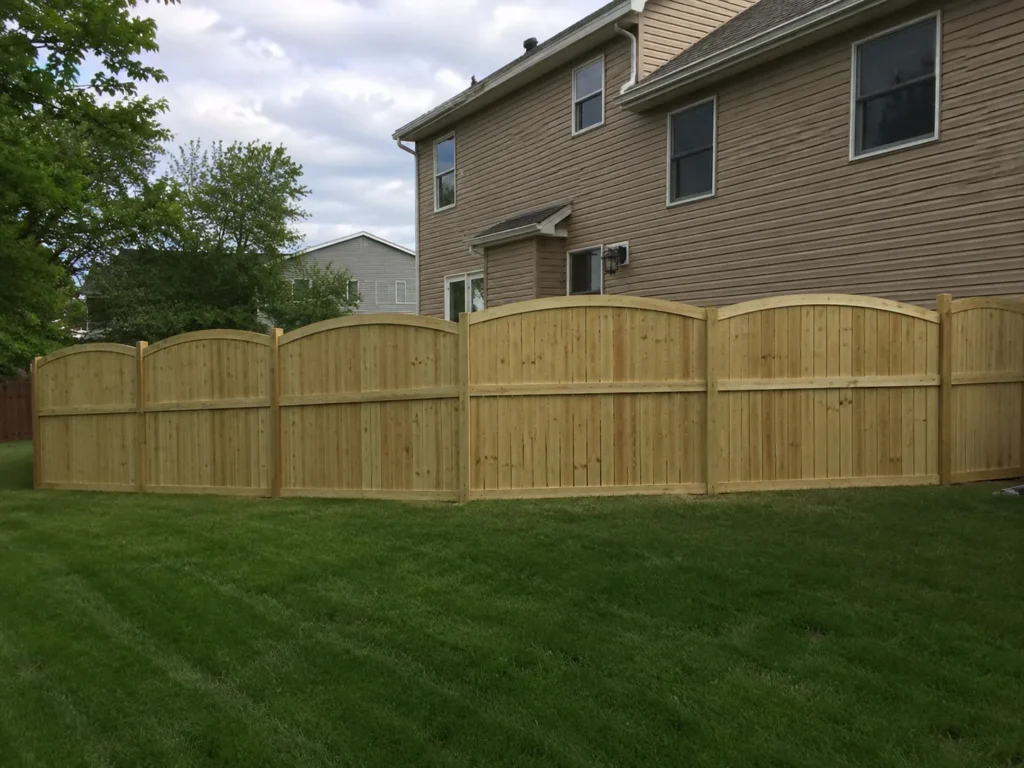
decorative scalloped cedar privacy fence shown at a property in Cedar Rapids, Iowa
25+ Years ExperienceHands-on construction experience
State LicensedDocumentation available
Fully InsuredDocumentation available
Locally OwnedWritten warranties on every project
Appearance • Weather Exposure • Wood Maintenance

Wood looks its best when the finish plan starts before the color goes on.

Sun, rain, moisture and seasonal weathering change the surface of a fence over time. Staining can refresh color and help manage exposure, but the result depends heavily on whether the wood is clean, sound, dry enough for the selected product and compatible with any coating already on the fence.

Price My Fence Staining
Refresh Weathered WoodBring color and a more finished appearance back to structurally sound wood fencing.
Protect Newer WoodPlan the finish around the actual moisture condition and product requirements rather than staining by calendar alone.
Maintain Cedar FencingUse a finish strategy that respects cedar’s appearance while helping manage UV and moisture exposure.
Extend the Maintenance CycleCatch surface wear before neglected wood and failed coatings become larger repair problems.
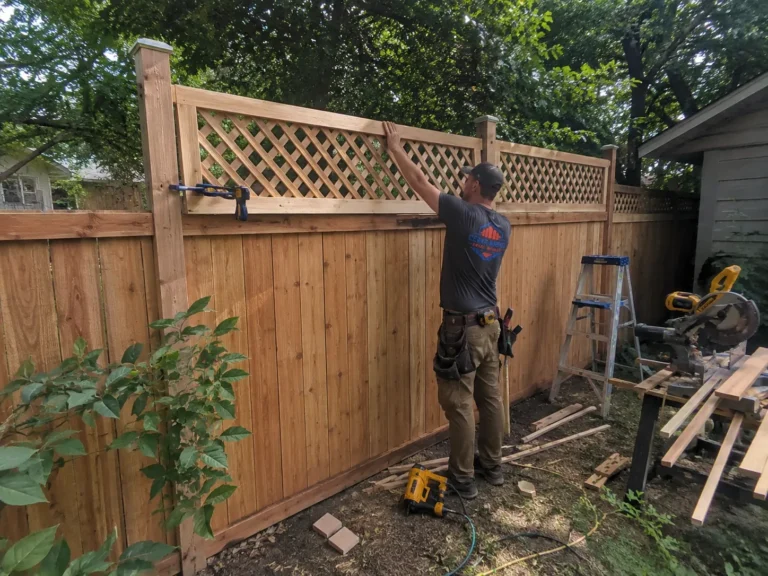
Close view of new vertical cedar privacy fence around a backyard in Cedar Rapids, Iowa
Stain vs. Sealer

“Staining and sealing” is the homeowner phrase. The actual coating system should be product-specific.

Some exterior wood stains are designed to provide color plus water- and weather-resistance as the finish system. A separate clear sealer is not automatically better and may not be compatible with every stain. We choose the preparation and finish approach around the wood and the coating being used instead of stacking products just because the labels sound protective.

Transparent / Natural-Look FinishesKeep more of the wood grain visible while adding product-specific protection and color tone.
Semi-Transparent StainsAdd more color while still allowing meaningful wood character to show through.
Solid-Color / Opaque FinishesProvide a more uniform color where the selected product and existing surface condition make that approach appropriate.

Exact stain type, opacity, color and compatibility depend on the wood, existing finish and product selected for the project.

New • Weathered • Previously Coated

The fence condition determines the prep work more than the fence age does.

Two fences that are the same age can need completely different preparation. Exposure, moisture, previous coatings, shade, vegetation and maintenance history all change the surface.

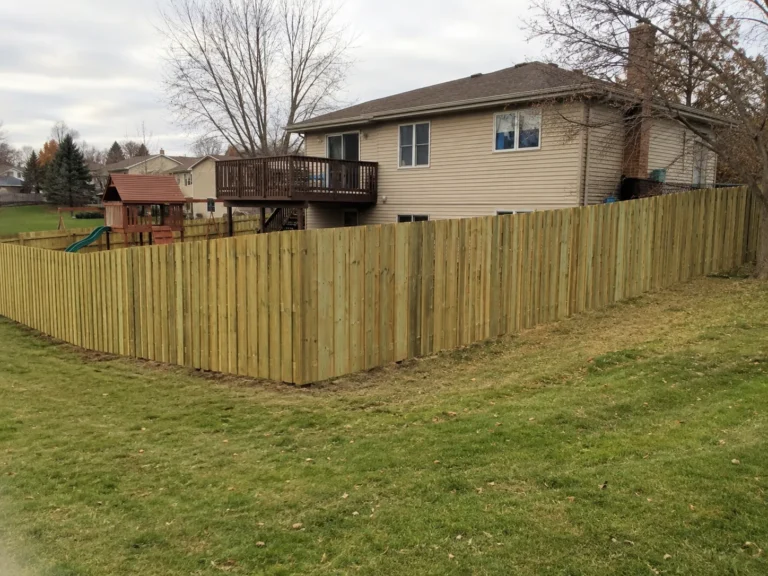
Close view of new vertical cedar privacy fence around a backyard in Cedar Rapids, Iowa
Newer Wood Fence Staining

Do not stain a new fence just because a certain number of days passed.

New wood needs to be ready to accept the selected finish. Lumber moisture, species, weather, exposure and the coating manufacturer’s instructions all matter. The goal is to finish wood when its condition is appropriate—not to force every new fence onto the same waiting period.

Planning a new wood fence? Explore Wood Fence Installation →
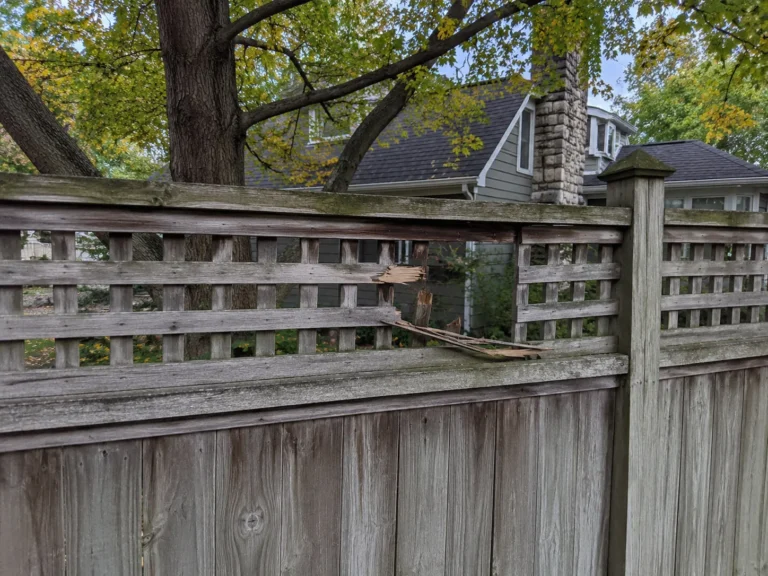
Detailed view of aged decorative lattice wood fence in Cedar Rapids, Iowa
Weathered Wood Fence Staining

Gray, faded or uneven wood may need more preparation before it needs more stain.

Weathered surfaces can hold dirt, organic growth, loose fibers and uneven absorption. Cleaning and preparation should be matched to the fence condition so the finish is applied to a sound surface rather than covering over contamination.

Get a weathered-fence evaluation →
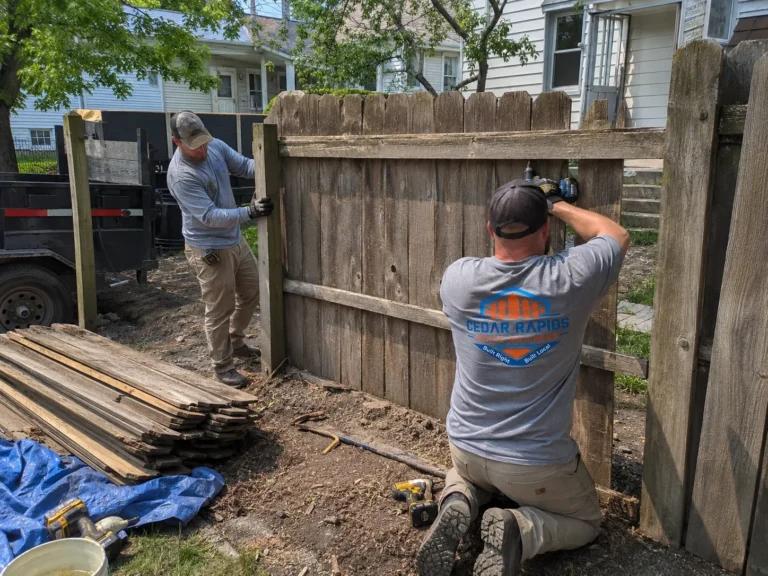
Detailed view of weathered wood privacy fence repair in Mount Vernon, Iowa
Previously Stained or Coated Fences

Old finish changes what can go on next.

Existing stain or coating may be faded, intact, peeling, patchy or incompatible with the new finish you want. Loose or failing material needs to be addressed, and product compatibility matters before applying another coat. We evaluate what is already on the wood before defining the prep and finish plan.

Ask about recoating an existing fence →
Fence Cleaning & Surface Preparation

The stain cannot make up for wood that was not ready to be coated.

Preparation is where many fence-finishing problems are won or lost. We match the prep to the actual surface instead of assuming every fence needs the same cleaning pressure, sanding or coating-removal process.

Inspect the WoodLook for rot, loose boards, failed fasteners, damaged sections and structural problems before finishing.
Clean the SurfaceRemove dirt and contamination using a method appropriate for the fence condition without unnecessarily damaging the wood fibers.
Address Failed FinishLoose, peeling or incompatible existing material can affect adhesion and appearance if ignored.
Let the Wood Reach the Right ConditionThe fence needs to be dry enough for the selected product and ready for coating according to that system’s requirements.
Use the Weather WindowTemperature, rain risk, humidity and drying conditions should fit the coating manufacturer’s application requirements.
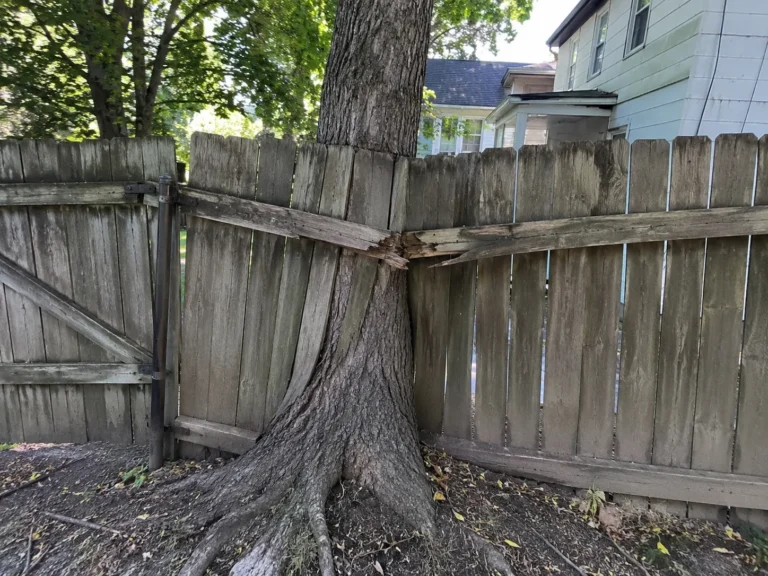
Cedar Rapids, Iowa fence project showing aged wood privacy fence built around a mature tree
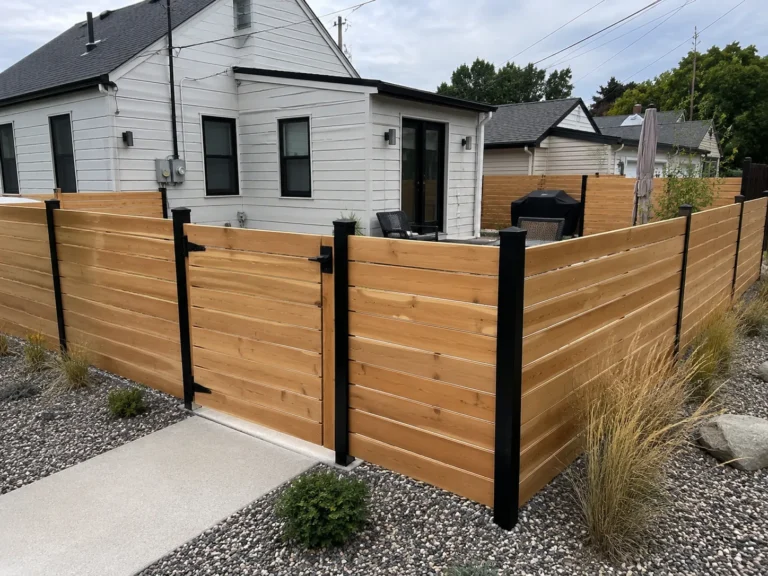
Cedar Rapids, Iowa view of horizontal cedar privacy fence corner with black posts
Cedar Fence Staining in Cedar Rapids

Keep cedar looking intentional instead of letting weather decide the final color.

Cedar is often chosen because homeowners like the natural wood appearance, but unfinished cedar changes color as it weathers. A stain strategy can preserve more of the warm wood character, shift the tone intentionally or create a more uniform finished appearance depending on the product and opacity selected.

Cedar Privacy FencesVertical, board-on-board and other privacy configurations can be finished around the look and maintenance level you want.
Horizontal Cedar FencesLong horizontal lines make uneven color and lap marks visually obvious, so application consistency matters.
Decorative CedarLattice, scalloped tops, gates and trim add edges and surfaces that need deliberate coverage.
Natural vs. More Uniform ColorFinish opacity determines how much of the original grain, tone variation and weathering remains visible.
Get My Cedar Fence Staining Estimate
Privacy • Picket • Horizontal • Ranch • Gates

Different wood-fence styles create different finishing challenges.

More boards, overlapping boards, rails, lattice, gates and tight spaces all change how much surface needs to be prepared and coated.

Privacy & Board-on-Board FencingLarge surface area plus overlaps, rails and tight board spacing can increase prep and application time.
Shadowbox & Semi-PrivacyAlternating boards create additional edges and surfaces that need consistent coverage.
Horizontal Wood FencingLong uninterrupted boards make color consistency and lap control especially noticeable.
Picket & Decorative FencingMore individual edges, profiles and openings can require more detailed application.
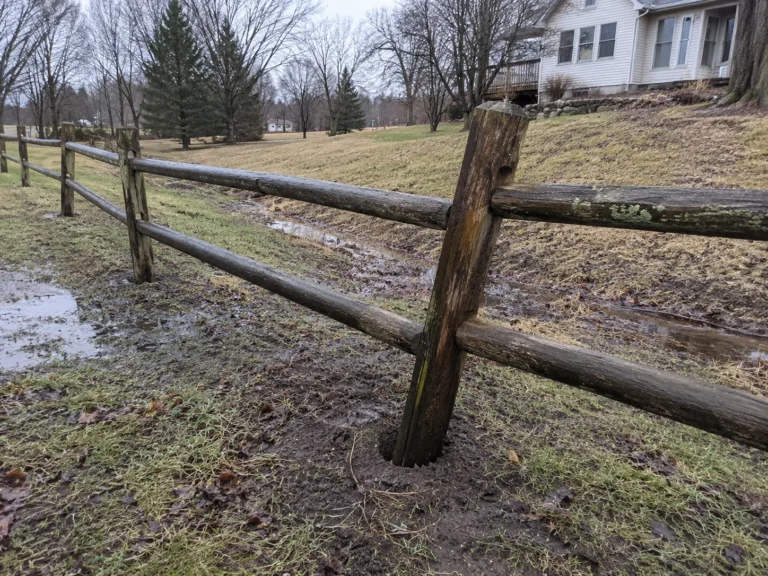
Split Rail & Ranch FencingOpen fence systems have less solid surface area but more exposed sides and irregular wood profiles.
Wood GatesFrames, edges, hardware areas and moving components need attention without interfering with gate operation.
Repair Before You Stain

Stain can improve a sound fence. It cannot turn rotten or structurally failed wood back into a sound fence.

If posts are failing, boards are rotten, rails are loose or gates are no longer structurally sound, those problems should be evaluated before spending money on surface finishing. Otherwise you risk coating material that still needs to be repaired or replaced.

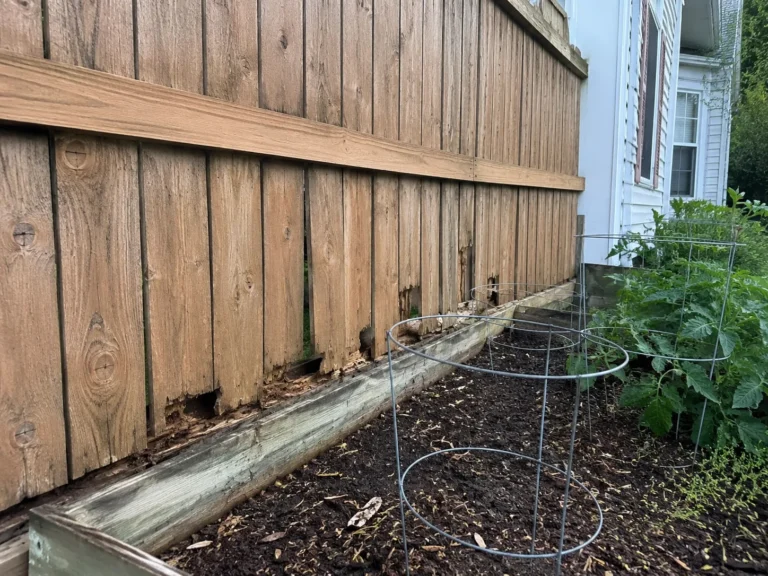
rotted lower boards on a wood privacy fence shown at a property in Hiawatha, Iowa
Fence Staining Cost Factors

What changes the price of staining and sealing a wood fence?

Fence-finishing cost is driven by much more than linear footage. Surface area, access, board layout, prep and existing coating condition can matter as much as fence length.

Fence Size & Surface AreaHeight, footage, board overlap, rails, lattice and whether one or both accessible sides are included affect total coating area.
Wood ConditionClean newer wood and heavily weathered wood do not require the same preparation.
Existing FinishPreviously coated wood may require additional evaluation and prep before a compatible new finish can be applied.
Fence StyleShadowbox, picket, lattice, gates and detailed profiles create more edges and working surfaces than a simple flat run.
Access & LandscapingVegetation, tight property lines, buildings and limited access can change setup and application time.
Repairs Before FinishingLoose, rotten or damaged components should be addressed before coating where necessary.
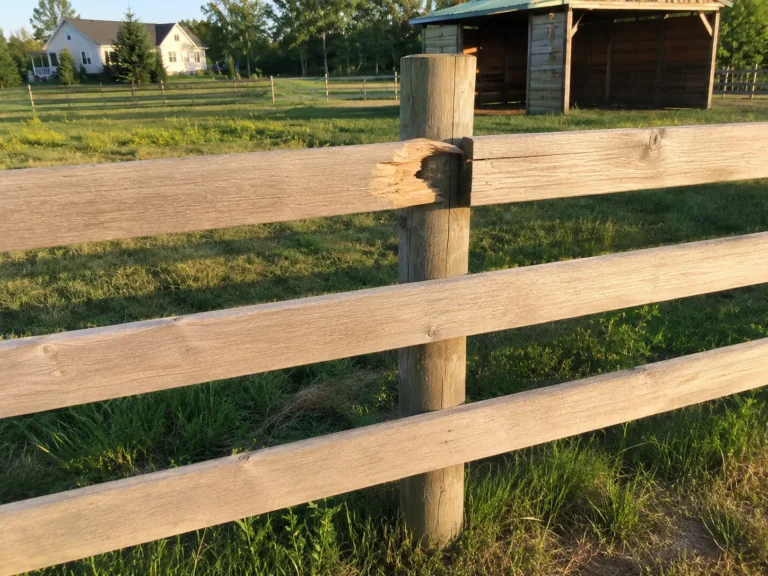
natural wood three rail ranch fence in Cedar Rapids, Iowa
Fence Stain Maintenance

Do not wait for a fixed anniversary date. Watch what the fence is telling you.

There is no single re-staining interval that fits every fence. Sun exposure, shade, rain, sprinklers, vegetation, fence orientation, product type, color and original prep all affect how quickly a finish weathers.

Color FadingUneven fade can signal that exposed sections are weathering faster than protected sections.
Water BehaviorChanges in how the wood absorbs or sheds water can be one clue that the finish is wearing.
Peeling or Failed CoatingFilm-forming or solid-color finishes may show failure differently than penetrating stains and may need more prep before recoating.
Wood Movement or DamageSurface maintenance should not hide loose boards, failing posts or gate problems that need repair.
Fence Staining Process

Evaluate the surface first. Choose the finish second.

The goal is to define what the fence needs before committing to a coating. That keeps preparation, product choice and expectations aligned with the actual wood.

  1. 01
    Review the Fence

    Identify wood type, condition, existing coating, damage, access and the look you want.

  2. 02
    Define the Prep

    Determine the cleaning, failed-finish and repair considerations needed for the surface.

  3. 03
    Choose the Finish

    Select a compatible stain/coating approach and color/opacity appropriate for the project.

  4. 04
    Apply in the Right Conditions

    Complete the approved work within the product’s required surface and weather conditions.

Fence Staining & Sealing in Cedar Rapids

Local wood-fence care for cedar, privacy, decorative and open wood fencing.

Cedar Rapids weather exposes wood fencing to strong sun, rain, humidity, seasonal temperature changes and repeated wet-dry cycles. The right maintenance plan depends on the fence itself: how it was built, where it sits, what coating is already present and how the surface has weathered.

We also serve Marion, Hiawatha, Robins, Fairfax and our other service areas.

Get a staining estimate based on the actual fence condition.

  • 25+ years construction experience
  • State licensed and fully insured
  • Locally owned Cedar Rapids-area service
  • References available upon request
  • Written warranty with every project
Get My Staining Estimate
Fence Staining FAQs

Questions homeowners ask before staining or sealing a wood fence.

You do not need to know the exact stain brand, opacity or prep process before contacting us. Start with the fence condition, whether it has been coated before, the look you want and any repair concerns.

Ask About My Wood Fence
Do you stain cedar fences?

Yes. Cedar privacy, horizontal, decorative, picket, gate and other cedar-fence configurations can be evaluated for staining. The finish approach depends on the wood condition, existing coating, desired color and product selected.

How long should a new wood fence dry before staining?

There is no single waiting period that fits every new fence. Lumber moisture, species, weather, exposure and the selected coating manufacturer’s instructions all matter. The wood should be ready to accept the finish rather than stained simply because a certain number of days passed.

Do you clean a fence before staining it?

Surface preparation is based on fence condition. Dirt, organic growth, weathered fibers and existing failed finish can interfere with the result, so cleaning and prep should be matched to the actual wood without using unnecessarily aggressive methods that can damage the surface.

Can an old gray or weathered fence be stained?

Often, yes, if the wood remains structurally sound and can be prepared appropriately. Weathered wood may need more cleaning and surface preparation, and the final appearance will depend on the condition and finish opacity selected.

Can you stain over an existing fence stain?

Sometimes, but compatibility and condition matter. Existing stain may be intact, faded, peeling or incompatible with the new product. Loose or failed finish may need additional preparation before another coating is applied.

What is the difference between transparent, semi-transparent and solid-color fence stain?

Transparent or natural-look finishes show the most wood character, semi-transparent stains add more color while preserving visible grain, and solid-color finishes create a more uniform opaque appearance. The best option depends on the wood condition, desired look and compatible product system.

How often should a wood fence be re-stained?

There is no universal interval. Sun exposure, shade, moisture, sprinkler contact, vegetation, fence orientation, product type and original preparation all affect how quickly a finish weathers. Inspect the fence condition rather than relying only on a fixed calendar.

Do you stain both sides of a fence?

The project scope should define which accessible surfaces are included. Property-line access, neighboring structures, vegetation and fence design can all affect whether both sides can be prepared and coated safely and consistently.

Should rotten boards or failed posts be repaired before staining?

Yes, structural problems should be evaluated first. Stain can improve and protect sound wood, but it cannot restore rotten boards, failed posts or structurally compromised sections. Repair or replacement may need to happen before surface finishing.

Do fence staining projects include a written warranty?

Yes. Every project receives a written warranty. Warranty length and terms vary by project type and are provided for the specific work being completed.

Cedar Rapids Fence Staining Contractor

Ready to protect the wood instead of letting another season weather it for you?

Get a free estimate for cedar fence staining, privacy-fence staining, weathered wood preparation, newer wood fencing, maintenance coats and other wood-fence finishing projects in Cedar Rapids.

25+ Years Experience • State Licensed • Fully Insured • Locally Owned • Written Project Warranties