Fence Repair vs. Replacement: How to Decide
Localized damage can often be repaired. Widespread post failure, repeated gate issues, rot across many sections, or a layout that no longer works may point toward replacement instead.
What matters most?
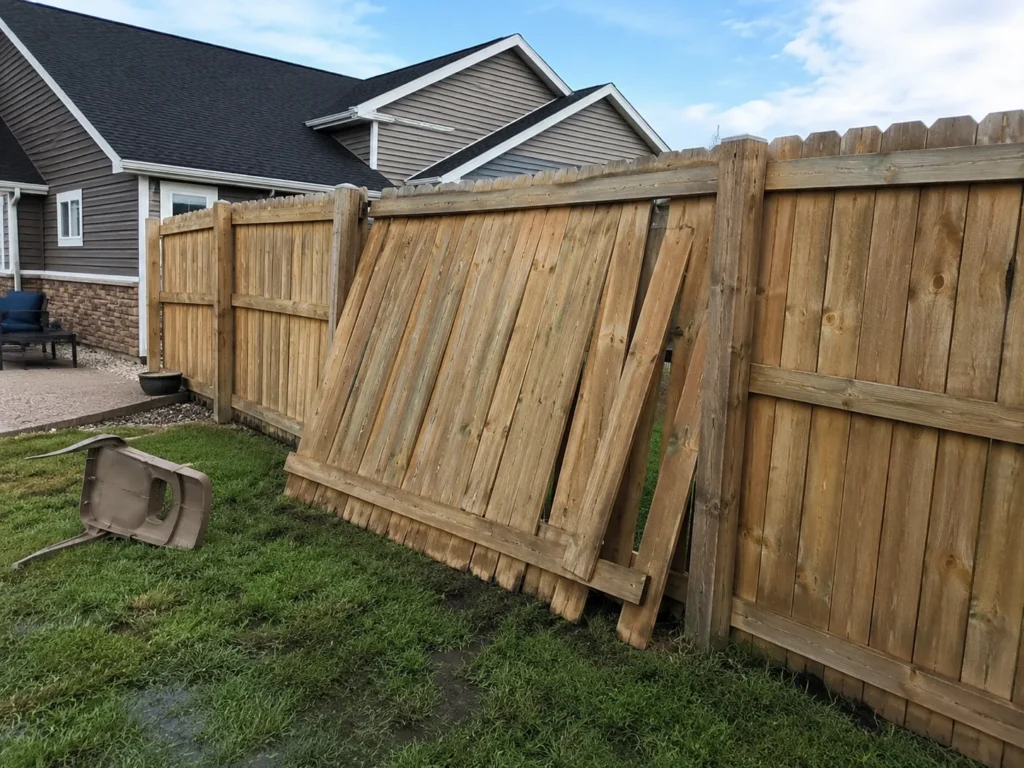
Repair is strongest when the failure is localized and the surrounding fence still has useful life. Replacement becomes more compelling when posts or materials are failing across multiple sections, repairs keep repeating, or the old layout no longer fits the property.
Ask whether the failed part is the problem—or a symptom of the entire fence.
One bad component can be repaired. A pattern of failures changes the conversation.
Repair and replacement become easier to compare when you look at the whole system.
No single row decides the project, but the pattern is useful.
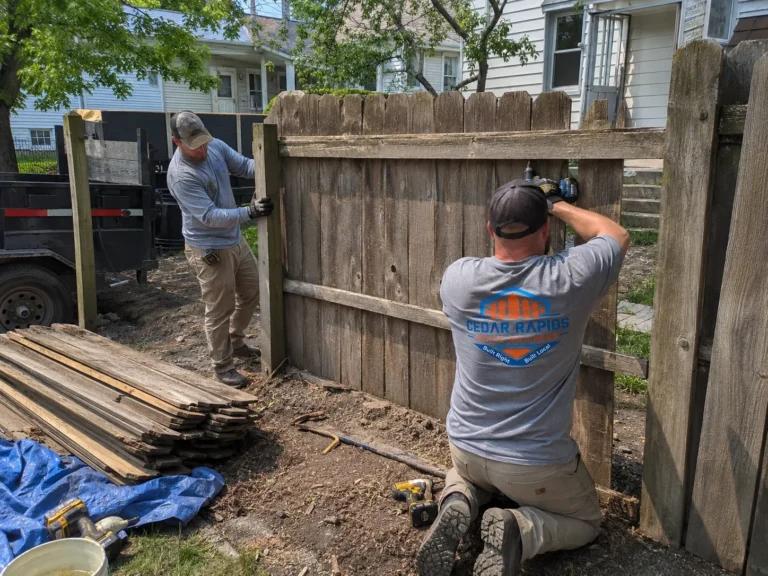
Surface weathering, rot and post failure are three different problems.
Gray or weathered wood can still be structurally serviceable. Localized board damage can often be repaired. Widespread rot or repeated post failure is a different situation.
Do not use stain to hide structural problems. Repair or replacement decisions come before finish maintenance.
Inspect the entire run before deciding from the ugliest six feet.
Look for patterns instead of one obvious problem.
Structure
- Posts moving at ground line
- Leaning in multiple runs
- Rails separating
- Corners/terminal points moving
Material
- Rot or cracks
- Broken panels/pickets
- Chain-link fabric/rail damage
- Corrosion or impact damage
Function
- Gate alignment
- Pet gaps
- Privacy problems
- Layout no longer matches yard use
Avoid spending repair money on a fence you already know you want to redesign.
Condition matters, but so does whether the old system still fits the property.
Use the guide to narrow the question, then choose the fence service that fits the actual project.
Use this guide to narrow the decision, then choose the fence service that fits when you are ready to plan the actual work.
Quick answers before you move into the project-specific decision.
These answers stay focused on the planning question. The property itself determines the final recommendation.
When is fence repair usually worth it?
Repair is strongest when the damage is localized and the surrounding posts, rails, panels or fabric remain structurally serviceable.
When should I consider replacing the fence?
Replacement deserves a serious look when failures are widespread, posts are failing across multiple sections, repairs keep repeating or the old layout/material no longer fits the property.
Can part of a fence be replaced?
Sometimes. A substantial failed section can be replaced while another separate section remains if the retained fence is sound and can integrate appropriately.
Does a leaning fence always need replacement?
No. One leaning section may be repairable. Multiple leaning runs or widespread post movement can indicate a larger structural problem.
Should I stain a fence before repairing it?
Structural repairs should be addressed before finish maintenance. Stain does not correct failed posts, rails or rotten material.
Can replacement improve the layout instead of copying the old fence?
Yes. Replacement is a good time to reconsider gate locations, privacy levels, material and the parts of the yard that actually need enclosure.
Know what you want the fence to accomplish, but not the exact system yet?
Send the property address and the problem you want to solve. We can help turn the planning into a project-specific fence direction.