Fence Height and Placement: What to Plan Before Installation
Height and placement decisions affect privacy, visibility, access, landscaping, neighbors, pets, and the overall appearance of the property. Planning them early prevents expensive changes later.
What matters most?
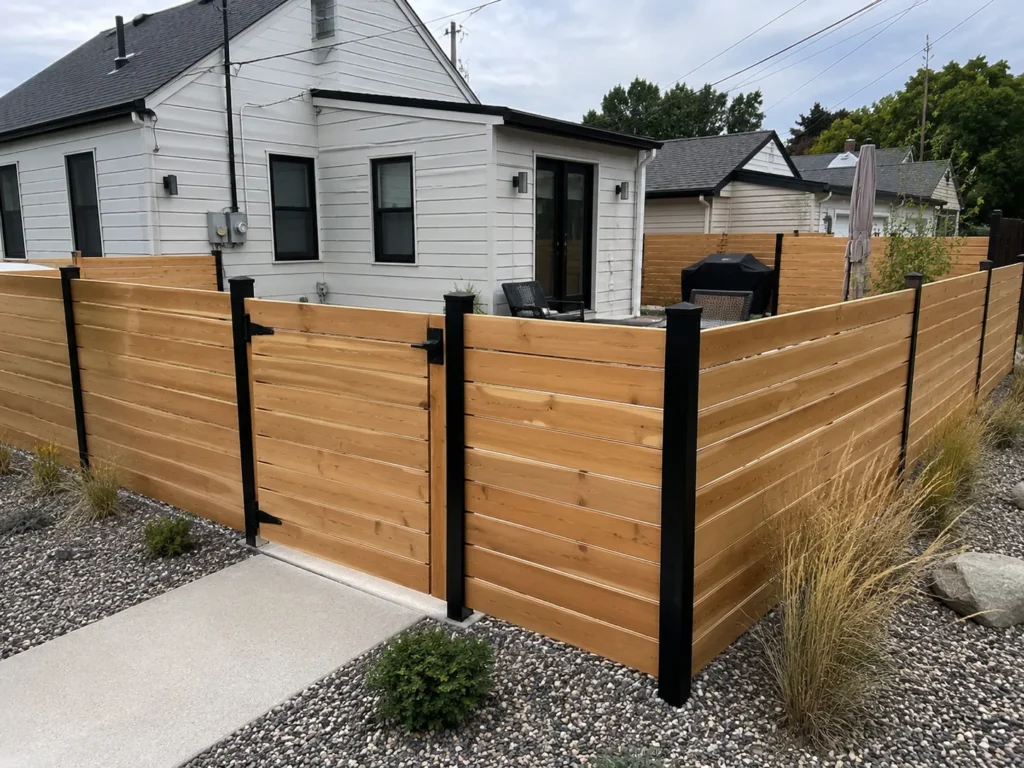
Fence height and placement should come from the property function, sight lines, gates, grade and verified boundaries—not from copying the neighbor’s fence. In Cedar Rapids, confirm the current City fence permit process and property-specific zoning requirements before construction.
Mark the places where the fence has to work with the property.
A fence line on paper can look simple until it reaches driveways, patios, utilities, trees and gates.
Access
- Walk gates
- Mower/equipment routes
- Trash/recycling path
- Service access
Use
- Patios and decks
- Dog areas
- Pool areas
- Play and garden spaces
Site
- Grade changes
- Mature trees and roots
- Drainage
- Existing fences and retaining walls
Choose height around the problem you are solving.
Height affects privacy, containment, visibility and curb appeal at the same time.
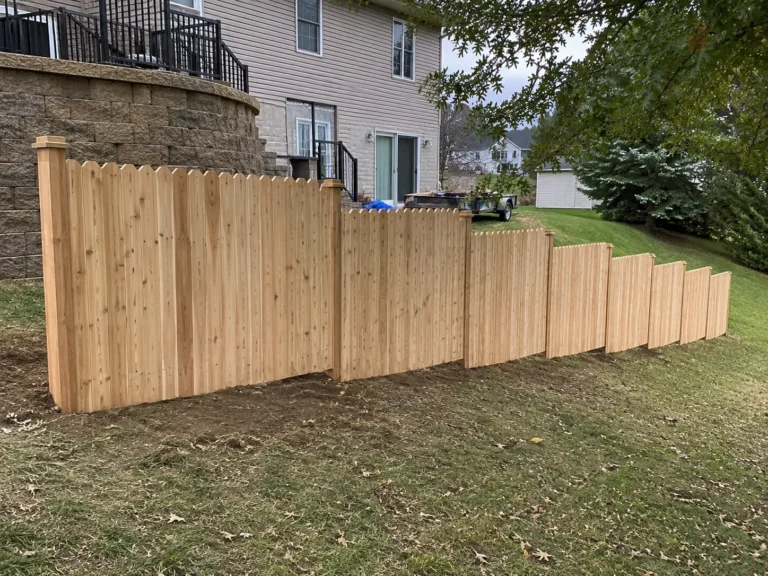
A fence that looks straight on a plan still has to meet the ground.
Sloped yards can create bottom gaps, stepped tops and awkward transitions if grade is ignored until installation.
Wood, vinyl, chain link and aluminum systems respond to slope differently. The design should account for the material and the actual elevation change.
Use current City guidance instead of copying an old fence or an old internet answer.
Cedar Rapids currently provides a City fence-permit application process through Development Services and the Customer Self Service portal. The City’s zoning FAQ also directs property owners to verify zoning and yard requirements for the specific property.
Requirements can change and special property conditions can matter. Confirm the current process and intended property line before construction.
Four assumptions worth stopping before the posts go in.
The layout is hard to change after concrete is set.
Use the guide to narrow the question, then choose the fence service that fits the actual project.
Use this guide to narrow the decision, then choose the fence service that fits when you are ready to plan the actual work.
Quick answers before you move into the project-specific decision.
These answers stay focused on the planning question. The property itself determines the final recommendation.
Do I need a fence permit in Cedar Rapids?
Current City guidance provides a fence-permit application process through Development Services/Customer Self Service. Verify the current requirements for your property before construction.
Can I use the existing fence as the property line?
Do not assume that. If the boundary is uncertain, resolve the property-line question before treating an old fence, hedge or lawn edge as authoritative.
How tall should my fence be?
Height should follow the goal—privacy, pets, visibility or another need—and must also fit current property-specific requirements.
What happens when the yard slopes?
The fence may need stepped, racked or other grade-conscious transitions depending on the material. Bottom gaps and top-line appearance should be planned before installation.
When should gate locations be decided?
Before the final fence layout. Gates affect access, sight lines, mower/equipment movement and supporting-post placement.
Why should I verify local rules right before installation?
Codes, zoning procedures and property conditions can change or vary. Current City guidance is more reliable than an old blog post or a neighbor’s project.
Know what you want the fence to accomplish, but not the exact system yet?
Send the property address and the problem you want to solve. We can help turn the planning into a project-specific fence direction.